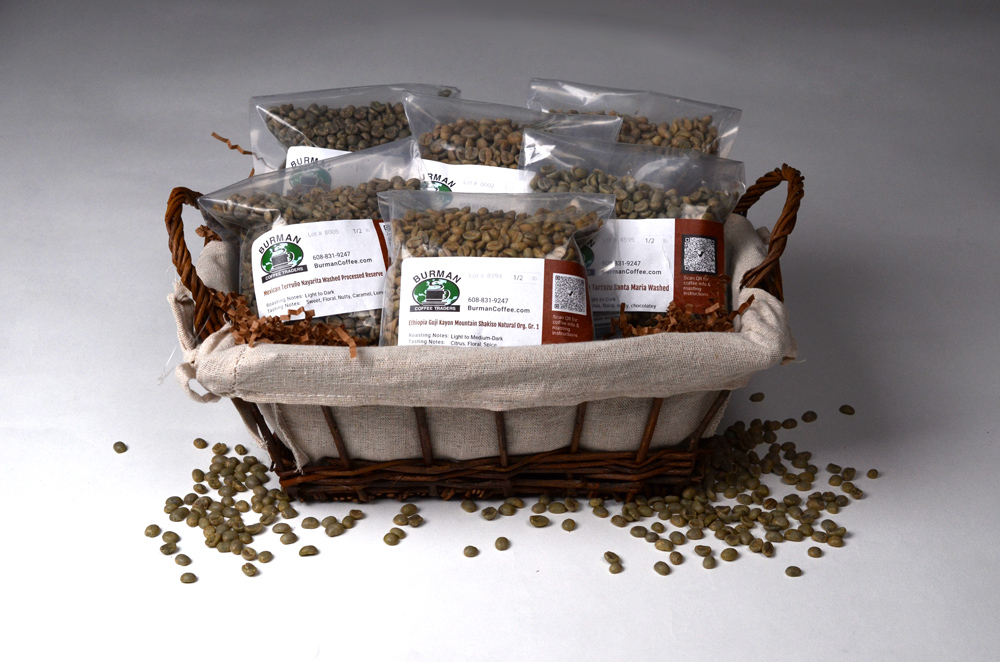
Sampler – 6 Half-Pounds – Burman Coffee’s Exotic Selection:
$21.49
$35.03
Description Don’t know what to try but like exotic tastes in coffee? Than this sampler is for you! In this sampler you will find top notch coffees that definitely don’t taste like normal coffee. From fruity naturals to bold wet-hulled. This is a wonderful collection of coffee that will showcase how diverse coffee can taste. Be warned though, exotic tastes always pull a love/hate relationship, these are all wonderful top notch examples but not everyone likes super exotic tasting coffee. Nicaraguan RFA Selva Negra – Natural Processed Nicaraguan Selva Negra coffee is cultivated in the most ecologically sustainable and socially responsible way possible. Learn more by reading our Selva Negra Grower Profile. Selva Negra’s history is in many ways the history of the coffee in Nicaragua altogether. In the 1880’s the Nicaraguan government invited young German immigrants to come and settle in Nicaragua in order to promote coffee growing in the northern highlands. Many accepted the offer, thus forming the main coffee plantations of the country; some estates bear names of their motherlands. Selva Negra means Black Forest, and the coffee estate is called La Hammonia, Latin for Hamburg. Located approximately 4,000 ft. above sea level, La Hammonia has been producing fine old style Arabica coffee for over 100 years. Eddy Kühl & Mausi Kühl-Hayn, the farm’s proprietors are descendants of two of these original German immigrants – Alberto Vogl and Klaus KÜhl. Selva Negra Estate Coffee is grown at a high altitude in a shaded environment. This allows the bean to have a slow development cycle which instills an intense and fulfilling flavor to each bean. The coffee is not only 100% Arabica, but more importantly it is mostly Bourbon and Typica strains (which produce higher quality beans than other varieties of coffee trees). The region of Matagalpa, Nicaragua is mountainous with excellent volcanic soil producing exceptional beans. Finally, the coffee is prepared using an environmentally friendly washing process, which gives the coffee still one more unique quality enhancing aspect. Tasting Notes:A very cool exotic cup best at the light to medium roast points but tasty from light to dark. The cup is a bit sweeter and brighter than the washed or honey processed. At lighter roasts one will get hints of citric and red fruit tones balancing with a slightly herbal malt like darker tone. Takes a little longer setup after roasting but clean and easy drinking at the lighter roast points. Medium roasts move the fruitier tones to the aftertaste and pronounce the rich maltiness of the cup. The red fruit can be more easily seen as the cup cools, or in cold brew. Darker roasts are hardly fruity but retain the sweet edge, a little smoky/roasty/malt like note makes for a tasty treat. Roasting NotesHigher chaff and will roast a little two toned in color. Error lighter than darker when playing around. When shooting for a light roast, judge it by the lighter shades of beans, make sure they get through first crack then cool it out. A speckled roast is normal, you will see 2-3 shades of beans when done roasting, this coffee is produced to give those results. Indonesian Bali Org. – Kintamani – Natural Very unique, overly fermented (very fruity) cup of joe. Bali is a tiny island– actually, a submerged volcano peak – just off the east coast of Java, with many small coffee farms. The farmers who grow Kintamani Natural belong to cooperative organizations known as Subak Abian (SA) founded on a Hindu philosophy known as “Tri Hita Karana” (the three causes of happiness). SA co-ops foster community in agricultural, social and religious activities, and have been certified Organic since 2008. Pesticides are never used on their coffee farms, and fertilizers are 100% organic. SA farmers grow almost all heirloom Arabicas, Typica & Bourbon. They use trees such as Erythrina, Tangerine, and Orange to shade the coffee, which improves yield and cup quality and enhances wildlife habitat.“Kintamani Natural” is 100% sundried on raised beds; It’s perhaps the first ever special prep natural Indonesian. Raised beds keep the cherry free of dirty flavor, and facilitate very quick drying in Bali’s high altitude sun and constant island breeze. The cup is extraordinarily exotic and unique with a rich, buttery mouthfeel, while retaining Indonesia’s full-bodied, savory character. It features super-intense, brandyish fruit flavors of plum and sweet cherry at lighter roasts; darker roasts develop much heavier body with a spicy, smoky twist. An easy roaster that’s exceptionally versatile, roast Bali “Kintamani Natural” any way you’d like; slow or quick, from first crack to French, you’ll get very unique and terrific flavor! Tasting Notes: Very fermenty/fruity, lower acidity cup with good body. A wild old world natural processed good from light to dark. A beautiful tasting bean this season: slightly fruitier but still balances with traditional Indonesian character. Hints of acidity with stronger fruitiness at lighter roasts, strong fruit/oak tones on a more nutty/earthy/chocolaty profile at darker roast points. No missing the wild side in this cup. Medium roasts are where one should shoot for their first roast, mutes some nutty tones and pronounces the chocolaty factor for some balance, still plenty of wild fruity natural processed tones in the cup. Dark roasts will introduce some smoky accents but retain great sweetness. A great balance of slow dried natural with thick and creamy dark tones all in one cup. Roasting Notes: Higher chaff and slightly uneven roasting. Right around a full city roast (close or touching 2nd crack) is going to be the sweet spot for a bulletproof roast level. Lighter can be quite tasty as well, much more emphasis on the fruitiness, but too light and one can get some sour/herbal. Most will want to push it more towards a medium roast or darker. Right before 2nd crack mutes up a bit of fruit but gets more like a single origin mokka java blend or Yemen type cup profile, a bit of rustic chocolate and a bit of fruit – almost anyone would like that cup! Indonesian Flores Bajawa Ngura “Komodo Dragon” Wet-Hulled Once harvested, the coffee is processed using the traditional Indonesian wet-hulling method (Giling Basah). The fruit is depulped and briefly fermented before the parchment is removed while the bean is still high in moisture. This unique exposure to the elements during drying is what gives this coffee and its famous cousins from Sumatra its signature heavy body, low acidity, and deep, earthy tones. The result is a bold, thick cup that captures the wild spirit of the volcanic island it calls home. Tasting Notes: A cool and slightly different spin from a classic Sumatra but right along the same taste profile. Best served in the medium to dark roast range, where its massive body and rich sweetness truly shine. In the cup, expect strong notes of baker’s chocolate, molasses, and black licorice, grounded by a pleasant smoky earthiness. For those who enjoy a heavy, coating mouthfeel, this coffee is a delight. If roasted lighter, you might catch faint whispers of soft fruit or vanilla and a crisp semi-sweet tone, but the acidity remains very low. Darker roasts amplify the bold chocolate and herbal spice notes, making it perfect for those who want a punchy, low-acid morning brew or a base for a stout espresso blend. Roasting Notes: Shines in the medium to dark range. A medium roast will keep the cup cleaner with hints of vanilla and sweet herbs; nudging it into the start of the second crack brings out the heavy body, dark chocolate, and classic smoky “Indo” character. It is an easy bean to roast with good screen size, but be careful not to scorch it if pushing high heat. Excellent for adding depth and crema to blends or as a standalone bold cup. Kenya Meru AA – Gichugene – Washed Processed This Meru Gichugene AA coffee from Kenya comes from Meru County, on the northern slopes of Mount Kenya. Unlike the more well-known counties in the south, Meru typically follows a distinct harvest pattern, with two regular harvest windows: April–July (mid-season harvest) and October–December (main harvest). The area is also one of the country’s most productive agricultural and coffee growing regions and is partially surrounded by protected areas (e.g., Meru National Park to the east), which influences the farm types: small plots, cool nights, and local water availability. This lot is produced by 723 smallholder farmers who deliver cherries to the Gichugene Coffee Factory, part of the Katheri Farmers Cooperative Society (FCS). In this system, members elect their representatives and make decisions regarding milling/marketing contracts and profit distribution. Katheri FCS manages four factories (including Gichugene), and in this area, it’s common for each grower to own around 200 trees. Upon arrival, the cherries are hand-selected, weighed, and recorded by the grower; they are then processed and blended to create these types of batches. As for the varieties, Kenyan icons are blended with newer materials: SL28 and SL34 typically contribute the “classic Kenyan” profile of defined citrus and clear sweetness; while Ru Iru 11 (developed to reduce losses from disease following historical crises) and Batian (released in 2010 with rust resistance and CBD) contribute to agronomic stability and a rounder cup. The AA grade corresponds to a larger bean preparation (commonly 17-18 mesh), which many roasters seek for its roasting consistency. Tasting Notes: A fresh and sweet Kenya with a bright touch that isn’t overwhelming. The first impression is of lime and a clean citrus brightness, followed by a soft, nutty sweetness reminiscent of fig rather than jam. As the cup cools, the sweetness shifts towards brown sugar and finishes with a crisp note of dark chocolate with hints of cocoa. The classic SL structure (a clear definition of “tea”) is maintained, while the complementary varieties help keep the sweetness consistent and the finish well-rounded, making this Kenya very easy to enjoy with any brewing method. Roasting Notes: This AA roast is consistent and easy to achieve, and small adjustments to the roast level are welcome. Like many Kenyas, it can show color sooner than expected, so rely more on overall development than appearance. A light to light-medium roast keeps the lime and fig fresh and bright. A medium roast brings out the brown sugar sweetness and makes the cup noticeably smoother. A medium-dark finish intensifies the dark chocolate character, but retains its sweetness if a dry, burnt finish is avoided. A high-bed roast and thorough wash usually result in clarity and a clean aftertaste; strive to achieve this by maintaining a controlled and even roast. Uganda Washed Robusta 17 Coffee in Uganda remains largely a smallholder crop. Farms are typically less than 2.5 hectares, and coffee is grown intercropped with subsistence crops rather than in a monoculture system. This smallholder structure is fundamental: Uganda is widely recognized as a major origin for smallholder coffee, with the vast majority of production coming from small farms. While Uganda is best known for its Robusta coffee, Arabica was introduced in the early 20th century and today accounts for a smaller proportion of the country’s exports compared to Robusta. This lot is a classic Ugandan Robusta, prepared as Screen 17 , a size classification indicating larger beans, selected using sieves. This coffee is washed, harvested between November and January, and grown at an altitude of 1900 to 2200 meters above sea level. Wet processing methods vary by region but generally include pulping the same day, a short open-air fermentation, and drying on raised beds or tarpaulins. Tasting Notes: Medium to dark roast beans. Fuller bodied cup with lower acidity and a creamy mouthfeel. The tastes are stronger and down the earthy chocolate and spice notes alley. There is a sweeter edge to this cup and a hint of a soft fruit tone making it a bit more interesting than most robusta coffees. Smoother and less herbal than the Indian Robusta which was a pleasant surprise. Roasting Notes: This is a solid and versatile Robusta. Even though it is washed, its appearance is more like a natural coffee, so note this coffee has a little more chaff than normal, It generally benefits from a dark to medium-dark roast to soften the woody notes and enhance sweetness. If roasting for espresso or blends, allow for sufficient development to build body; simply avoid roasting it too long to prevent it from becoming flat or burnt-tasting. Indian Monsooned Malabar The Indian Monsooned Malabar is a very unique and exotic coffee; usually people have a love/hate relationship with this bean but it is one of our top sellers year in and year out. Monsoon Malabar coffee is prepared from Arabica cherries (“cherry” refers to dry-processed coffees in India). After grading, the coffee is transported to the coastal city of Mangalore where the “monsooning” is carried out in large openwalled warehouses. During the rainy months of June through August, the coffee is spread inside the warehouses with very good aeration and ventilation at a particular thickness so that the coffee slowly absorbs moisture. After it absorbs sufficient moisture and bloats in size, it has to be periodically bulked and bagged and stacked so as to ensure proper and uniform “monsooning.” This process has to be carried out many times during the months of the monsoon. After September, when the rains subside and the temperatures are higher, the ghostly white and swollen beans are sent through the final grading (gravity tables and hand-sorting) in order to obtain the Malabar export quality. The farmers not only produce coffee, they also grow pepper, cardamom, and oranges. Most of the farms are 80 to 100 years old and belong to third generation growers. Tasting Notes:The Indian Monsooned Malabar is a very low acidity, thick and creamy, overly earthy style cup of coffee. There is a lot of sweet tones in this cup depending on the roast and one can taste a little hint of the natural processing soft fruit tones and classic Indian spice notes. A pretty wild cup for you stronger coffee fans or espresso heads. Roasting Notes:Usually used for espresso at the darker roast points but many of our customers enjoy the single origin drip brew or french press at a slightly lighter roast point.
Central America